
From Gaming to Healthcare: Unveiling the Broad Impact of VR and AR
Virtual Reality (VR) and Augmented Reality (AR) have emerged as transformative technologies that extend far beyond the realm of gaming. While VR immerses users in entirely computer-generated environments, AR overlays digital information onto the real world, enhancing the user’s experience without fully detaching them from reality. Both technologies hold immense potential for reshaping industries and improving human interactions. This article explores the diverse applications of VR and AR across various sectors, highlighting their profound impact on healthcare, education, manufacturing, real estate, and entertainment.
The Evolution of VR and AR Beyond Gaming
Initially developed for entertainment purposes, VR and AR have rapidly expanded into numerous professional domains. These technologies offer unique opportunities for training, simulation, and interaction, making them invaluable tools for industries seeking innovation and efficiency. By simulating real-world scenarios, VR and AR enable professionals to practice complex tasks in a safe, controlled environment before applying their skills in actual situations.
Healthcare: Revolutionizing Patient Care and Training
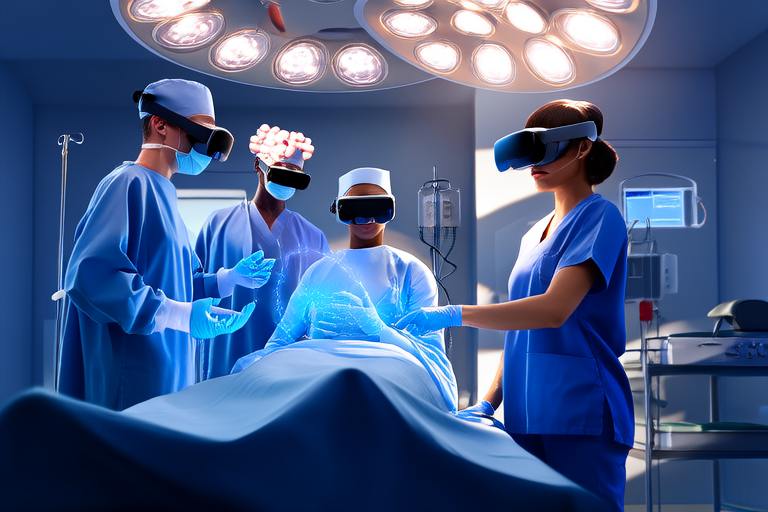
In the healthcare sector, VR and AR are proving to be game-changers. Surgical simulations, for instance, allow medical students and surgeons to practice intricate procedures repeatedly, reducing errors and enhancing precision. Patients benefit from these advancements as well, with VR-based therapies aiding in physical rehabilitation and pain management. Mental health professionals are also leveraging VR to create immersive therapeutic environments that help patients confront and overcome phobias and anxieties.
Moreover, AR applications assist healthcare providers in visualizing patient data in real-time, facilitating more accurate diagnoses and personalized treatment plans. By overlaying medical scans and vital signs onto patients, AR can enhance the decision-making process during critical interventions.
Education: Enhancing Learning Experiences
The educational landscape is being redefined by VR and AR, offering students immersive learning experiences that foster deeper understanding and engagement. Through virtual field trips and interactive lessons, educators can transport students to historical events, distant planets, or microscopic worlds, making abstract concepts tangible and relatable. For instance, biology students can dissect virtual organisms or explore the human body in 3D, providing a level of detail and interactivity unattainable through traditional methods.
Additionally, VR and AR can support special-needs education, accommodating diverse learning styles and creating inclusive environments. These technologies also facilitate remote learning, bridging geographical gaps and ensuring access to quality education for students worldwide.
Manufacturing: Improving Safety and Efficiency
Manufacturing industries are increasingly adopting VR and AR to enhance worker training and improve safety protocols. By simulating hazardous conditions, VR allows employees to practice emergency responses and equipment operation in a risk-free setting. AR, on the other hand, aids technicians in performing maintenance tasks by providing step-by-step instructions and displaying relevant data directly within their field of vision.
These technologies also optimize production processes, enabling manufacturers to visualize product designs and assembly lines before committing resources to physical prototypes. This not only saves time and costs but also promotes sustainability by minimizing waste and material usage.
Real Estate: Redefining Property Viewing and Design
The real estate industry is witnessing significant changes thanks to VR and AR. Potential buyers can now explore properties virtually, experiencing detailed walkthroughs and visualizations that bring floor plans to life. This technology eliminates the need for physical visits, saving time and reducing travel expenses.
Furthermore, AR enables architects and designers to showcase proposed renovations or new constructions in real-world settings, allowing clients to visualize the final outcome before construction begins. This collaborative approach fosters better communication and ensures that all parties are aligned with the project’s vision.
Entertainment: Pushing Boundaries in Film and Theme Parks
The entertainment sector continues to innovate with VR and AR, offering unprecedented experiences in film and theme parks. Immersive storytelling through VR transports audiences into cinematic universes, blurring the line between viewer and character. Meanwhile, theme parks incorporate AR elements to create interactive attractions, enhancing guest participation and immersion.
These technologies also cater to niche markets, such as escape rooms and live-action role-playing games, where participants engage in collaborative problem-solving and adventure in simulated environments.
The Future of VR and AR: Challenges and Opportunities
As VR and AR continue to evolve, they present exciting possibilities for the future. However, several challenges must be addressed to realize their full potential. Accessibility remains a key issue, as high-quality hardware and software often come at a premium. Ensuring equitable access to these technologies will be crucial for fostering innovation and inclusion.
Cost is another factor that may hinder widespread adoption. While initial investments can be substantial, long-term savings in training, efficiency, and safety justify the expense. Ethical considerations also arise, particularly regarding privacy and data security. As VR and AR become more integrated into daily life, safeguarding personal information and maintaining transparency in data collection will be paramount.
Despite these challenges, the future of VR and AR looks promising. With ongoing advancements in technology and increasing awareness of their benefits, these tools are poised to revolutionize industries and enrich human experiences. By embracing the opportunities and addressing the challenges, we can unlock the full potential of VR and AR, shaping a future where immersive technologies play a central role in our lives.