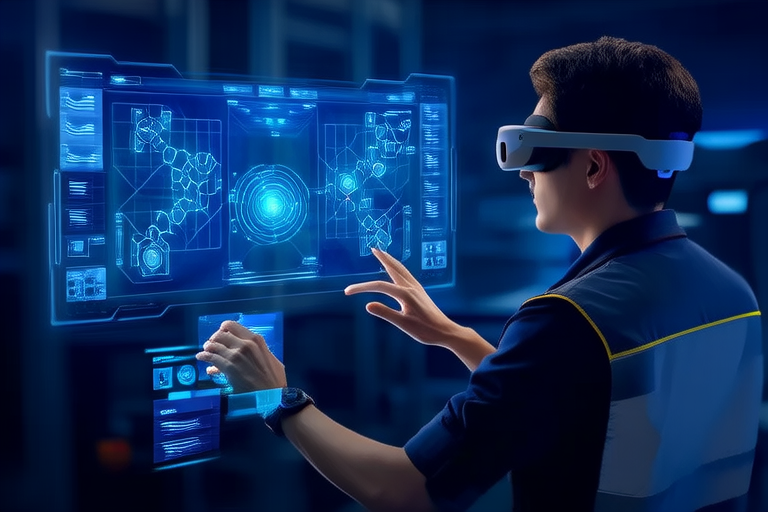

Revolutionizing Industries: The Impact of VR and AR on Business Models
Introduction
Virtual Reality (VR) and Augmented Reality (AR) are rapidly emerging technologies that are set to revolutionize the way businesses operate. These immersive technologies offer new dimensions of interaction, engagement, and innovation, making them increasingly important in modern business. As VR and AR continue to evolve, they are poised to disrupt traditional business models, offering unprecedented opportunities for growth and transformation.
This article explores the profound impact of VR and AR on various industries, highlighting their potential to reshape business models and enhance customer experiences. By examining specific use cases and real-world examples, we will delve into the transformative power of these technologies and discuss the challenges and future prospects they present.
Overview of VR and AR Technologies
Virtual Reality (VR) refers to computer-generated environments that simulate physical presence in places in the real world or imagined worlds. Users typically experience VR through head-mounted displays (HMDs) or large screens, creating an immersive experience that can transport them to entirely different environments.
Augmented Reality (AR), on the other hand, overlays digital information onto the real world, enhancing the user’s perception of their surroundings. AR can be experienced through smartphones, tablets, smart glasses, or specialized AR devices. While VR immerses users in a completely artificial environment, AR enhances the real world with additional layers of information.
Both VR and AR have seen significant advancements in recent years, driven by improvements in hardware, software, and connectivity. Innovations such as more advanced sensors, higher resolution displays, and more sophisticated algorithms have made these technologies more accessible and practical for everyday use. As a result, VR and AR are now being adopted across a wide range of industries, from retail and healthcare to education and manufacturing.
Impact on Specific Industries
Retail and E-commerce
The retail and e-commerce sectors are among the early adopters of VR and AR technologies. These tools are enhancing customer experiences by offering virtual try-ons, interactive shopping environments, and personalized product recommendations. For instance, consumers can now use AR apps to visualize how furniture would look in their homes before purchasing, or try on clothes virtually using their smartphones.
Companies like IKEA and Sephora have successfully integrated VR and AR into their e-commerce platforms, providing customers with immersive and engaging shopping experiences. By leveraging these technologies, retailers can increase customer satisfaction, drive sales, and build stronger brand loyalty.
Healthcare
In the healthcare sector, VR and AR are being used to improve medical training, patient care, and therapy. Surgical simulations, for example, allow medical students and professionals to practice complex procedures in a safe and controlled environment. Similarly, AR can assist surgeons during operations by providing real-time visualizations of patient anatomy, enhancing precision and reducing errors.
Pain management and therapy are also benefiting from VR and AR. Patients can engage in immersive experiences designed to distract them from pain or help them cope with anxiety and stress. Additionally, AR can facilitate remote consultations, enabling healthcare providers to offer virtual care to patients in remote locations.
While the potential of VR and AR in healthcare is immense, there are also challenges and ethical considerations. Issues such as data privacy, patient consent, and the potential for over-reliance on technology must be carefully addressed to ensure responsible adoption.
Manufacturing and Engineering
VR and AR are transforming the manufacturing and engineering industries by improving design processes, quality control, and maintenance. Designers can use VR to create and test prototypes in virtual environments, allowing for rapid iteration and refinement. AR, on the other hand, provides real-time guidance during assembly and repair tasks, helping workers to complete complex tasks more efficiently and safely.
Case studies from companies like Boeing and Siemens demonstrate how VR and AR can enhance productivity and safety in manufacturing. By leveraging these technologies, businesses can reduce errors, minimize downtime, and improve overall operational efficiency.
Education and Training
The potential of VR and AR in education and training is vast, offering immersive learning environments that can significantly enhance knowledge retention and practical skills. Students and trainees can engage in realistic simulations, hands-on exercises, and interactive lessons that bring theoretical concepts to life.
For example, flight simulators have long been used in pilot training, but VR and AR are expanding this concept to a wide range of fields, including medicine, construction, and military operations. By providing learners with realistic scenarios, these technologies can prepare individuals for real-world challenges and improve their performance.
Real Estate and Tourism
VR and AR are transforming the real estate and tourism industries by offering new ways to market and experience properties and destinations. Virtual property tours and interactive maps allow potential buyers and renters to explore properties remotely, while augmented reality walkthroughs provide a more immersive and engaging experience.
Companies like Matterport and Airbnb are already leveraging VR and AR to enhance customer experiences. By providing virtual tours and interactive maps, these businesses can attract more visitors and increase bookings. As VR and AR continue to evolve, they will likely play an even greater role in shaping the future of real estate and tourism.
Business Model Transformations
The adoption of VR and AR is leading to significant shifts in traditional business models. Companies are moving towards experiential marketing, personalized services, and collaborative workspaces, all of which are enabled by these immersive technologies. For instance, brands can use VR to create immersive marketing campaigns that engage customers on a deeper level, while AR can provide personalized product recommendations based on user preferences and behavior.
Data analytics and user feedback are critical in optimizing VR and AR solutions. By collecting and analyzing data from user interactions, businesses can refine their offerings and improve the overall customer experience. This data-driven approach ensures that VR and AR solutions are tailored to meet the specific needs of users, driving greater adoption and satisfaction.
Challenges and Future Prospects
Despite the numerous benefits, there are several challenges associated with adopting VR and AR technologies. Cost remains a significant barrier for many businesses, particularly those with limited budgets. Additionally, the integration of VR and AR with existing systems can be complex and time-consuming, requiring significant investment in infrastructure and training.
Accessibility is another challenge, as not all users may have access to the necessary hardware or software. Furthermore, there are concerns about data privacy and security, particularly when sensitive information is involved. Addressing these challenges will be crucial for widespread adoption and success.
Looking ahead, the future of VR and AR holds great promise. Continued advancements in hardware and software, along with increased affordability and accessibility, will likely lead to broader adoption across industries. Breakthroughs in areas such as haptic feedback, eye-tracking, and AI integration will further enhance the capabilities of these technologies, opening up new possibilities for innovation and growth.
Conclusion
In conclusion, VR and AR are transforming industries by offering new dimensions of interaction, engagement, and innovation. From retail and healthcare to education and manufacturing, these technologies are reshaping traditional business models and enhancing customer experiences. As VR and AR continue to evolve, they will likely play an even greater role in shaping the future of business.
By embracing these technologies, businesses can unlock new opportunities for growth and differentiation. However, it is essential to address the challenges and ethical considerations associated with VR and AR adoption. With careful planning and execution, businesses can harness the full potential of these technologies and thrive in an increasingly competitive landscape.