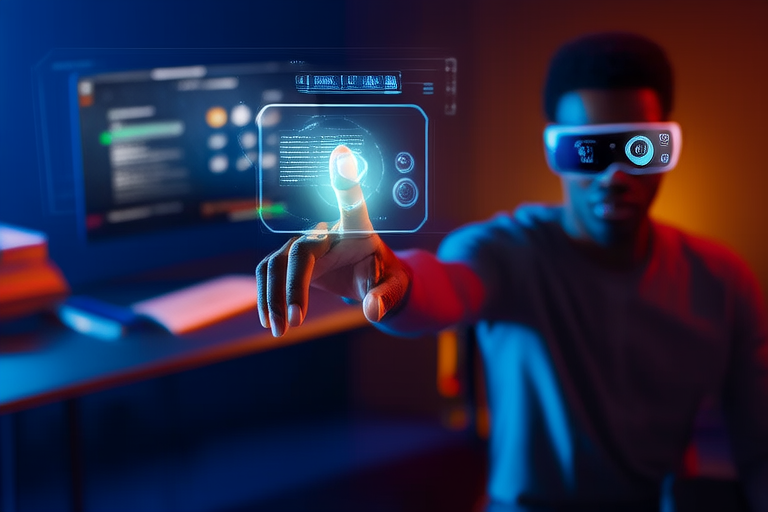

Beyond Boundaries: Leveraging VR and AR for Enhanced User Experiences
Introduction
Virtual Reality (VR) and Augmented Reality (AR) are transformative technologies that have been rapidly evolving over the past few decades. VR immerses users in entirely digital environments, while AR overlays digital information onto the real world. These technologies have the potential to significantly enhance user experiences across a wide range of industries, from entertainment to healthcare, education, and beyond.
Initially conceived as niche technologies, VR and AR have grown into powerful tools that are reshaping industries and redefining user interaction. This article explores the evolution of these technologies, their diverse applications, and the ways in which they can enhance user experiences.
The Evolution of VR and AR
The history of VR and AR dates back several decades. Early VR systems were bulky and expensive, limiting their widespread adoption. However, significant milestones, such as the introduction of head-mounted displays (HMDs) and advancements in graphics processing, have paved the way for more accessible and immersive experiences.
Key innovators like Jaron Lanier and Tom Caudell played pivotal roles in shaping the fields of VR and AR. Companies like Oculus and Magic Leap have further propelled these technologies into mainstream awareness. Today, VR and AR are no longer confined to research labs; they are being adopted by businesses and consumers alike.
Applications Across Industries
Entertainment
In the entertainment sector, VR and AR are revolutionizing gaming, film, and live events. Gamers can now step into virtual worlds, experiencing games in an entirely new dimension. Similarly, filmmakers are experimenting with AR to create interactive storytelling experiences, while live events are becoming more immersive through the use of AR-enhanced venues.
Healthcare
The healthcare industry is leveraging VR and AR for medical training, therapy, and patient care. Medical students can practice surgeries in virtual environments, reducing the risk of complications during real procedures. Additionally, VR is being used in therapy to treat conditions like PTSD and anxiety, offering patients controlled and safe therapeutic environments.
Retail
Retailers are enhancing shopping experiences through VR and AR. Customers can virtually try on clothes or test out furniture before purchasing, leading to more informed decisions. AR-powered apps allow shoppers to visualize products in their homes, providing a seamless shopping experience.
Education
In education, VR and AR are transforming traditional classrooms into dynamic, interactive learning environments. Students can explore historical sites, conduct virtual experiments, and engage with complex concepts in three-dimensional space. These technologies make learning more engaging and accessible, fostering deeper understanding and retention.
Manufacturing
The manufacturing sector is benefiting from VR and AR through improved design processes, remote collaboration, and maintenance. Engineers can visualize and refine designs in real-time, while workers can access AR-guided instructions for complex tasks. This enhances efficiency and reduces errors, ultimately improving productivity.
Enhancing User Experiences
The immersive nature of VR and AR offers numerous psychological and sensory benefits. Users report increased engagement, heightened emotional responses, and a greater sense of presence in virtual environments. These technologies enable more personalized interactions, allowing users to tailor their experiences to suit individual preferences.
By bridging the gap between the physical and digital worlds, VR and AR make interactions more intuitive and natural. Whether it’s navigating a virtual space or interacting with digital objects, these technologies offer a more seamless and immersive experience.
Challenges and Future Prospects
Despite their potential, VR and AR face several challenges. High costs, limited accessibility, and technical limitations hinder widespread adoption. However, ongoing advancements in hardware, software, and user interfaces promise to address these issues. Innovations in haptic feedback, eye-tracking, and spatial audio will enhance immersion and realism.
Emerging trends, such as the integration of AI and machine learning, are poised to expand the capabilities of VR and AR. As these technologies continue to evolve, we can expect broader adoption and even more innovative applications.
Conclusion
VR and AR are not just tools but transformative technologies that are reshaping industries and redefining user experiences. From entertainment to healthcare, retail, education, and manufacturing, these technologies offer immense potential for innovation and improvement.
We encourage readers to explore and embrace VR and AR, recognizing their power to enhance user experiences and drive positive change. As these technologies continue to evolve, the possibilities are limitless, and the future looks incredibly promising.