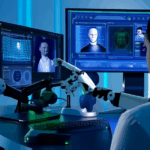
From Concept to Reality: Exploring Innovations in Computer Vision
Introduction
Computer vision is a rapidly evolving field that bridges the gap between human perception and machine intelligence. It enables machines to interpret and understand visual data, much like humans do with their eyes. This capability has become increasingly important in modern technology, driving advancements in numerous industries. What began as a theoretical concept has now transformed into practical applications that are revolutionizing the way we interact with the world.
The journey from concept to reality in computer vision has been marked by significant milestones and breakthroughs. This article explores the historical background, key technologies, real-world applications, and future prospects of this transformative field.
Historical Background
The origins of computer vision can be traced back to the mid-20th century when researchers began exploring ways to enable machines to “see” and interpret images. One of the earliest pioneers was David Marr, who proposed a computational theory of vision in the 1970s. His work laid the foundation for understanding how visual information is processed in the brain and translated into machine algorithms.
During the initial stages, computer vision faced several challenges. Limited processing power and inadequate algorithms hindered progress. However, the development of more sophisticated mathematical models and increased computational resources gradually overcame these obstacles. Notable contributors include Takeo Kanade and Olivier Faugeras, whose research in image processing and 3D reconstruction significantly advanced the field.
Breakthrough Technologies
The true leap in computer vision came with the advent of artificial intelligence (AI) and machine learning (ML). Neural networks, particularly deep learning techniques, have been instrumental in enabling machines to recognize patterns and make sense of complex visual data. Convolutional Neural Networks (CNNs), a type of deep learning model, have been especially effective in image classification tasks.
Advancements in hardware, such as GPUs and TPUs, have further accelerated the development of computer vision systems. These technologies have allowed researchers to train larger and more complex models, leading to improved accuracy and efficiency. For instance, CNNs have been pivotal in facial recognition systems, object detection, and autonomous driving technologies.
Real-World Applications
Healthcare
In healthcare, computer vision is being used to enhance diagnostic capabilities. Medical imaging techniques like MRI and CT scans are analyzed by AI systems to detect abnormalities more accurately and quickly than human radiologists. For example, AI algorithms can identify early signs of cancer in mammograms, potentially saving lives.
Automotive
The automotive industry has embraced computer vision for developing autonomous vehicles. Advanced driver-assistance systems (ADAS) rely on cameras and sensors to monitor surroundings, detect obstacles, and assist drivers in making safe decisions. Companies like Tesla and Waymo are at the forefront of integrating AI-driven vision systems into their vehicles.
Retail
Computer vision is also transforming the retail sector. In-store cameras can track customer behavior, optimizing store layouts and improving inventory management. Additionally, cashier-less stores like Amazon Go use computer vision to automatically charge customers based on items they take from shelves.
Security
In security applications, computer vision enhances surveillance systems. Real-time monitoring and facial recognition technologies help identify individuals, track movements, and detect suspicious activities. This technology is widely used in airports, public spaces, and corporate environments.
Entertainment
The entertainment industry leverages computer vision for virtual reality (VR) and augmented reality (AR) experiences. These technologies create immersive environments where users can interact with digital objects and characters. For example, AR filters on social media platforms use computer vision to overlay animations onto users’ faces in real time.
Current Trends and Future Prospects
Several emerging areas of research are pushing the boundaries of computer vision. One such area is unsupervised learning, which aims to develop algorithms that can learn from unlabeled data. Another trend is the integration of computer vision with other AI technologies, such as natural language processing (NLP), to create more intelligent systems.
Potential future applications include personalized medicine, smart cities, and enhanced human-computer interaction. However, ethical considerations and challenges must be addressed. Issues like privacy, bias in algorithms, and the potential misuse of facial recognition technology require careful attention to ensure responsible deployment.
Conclusion
The journey of computer vision from a theoretical concept to a practical reality has been remarkable. From early developments to groundbreaking technologies, the field has evolved significantly. Today, computer vision powers a wide range of applications, enhancing industries and improving lives.
As we look to the future, the continued advancement of computer vision will undoubtedly shape our world in profound ways. By addressing ethical concerns and fostering innovation, we can harness the full potential of this transformative technology to build a smarter, safer, and more connected future.