
Enhancing Human-Machine Interaction: The Role of Computer Vision in AI
Introduction
Human-machine interaction (HMI) has become an integral part of modern technology, shaping how we interface with devices and systems in our daily lives. As technology advances, the need for more intuitive and efficient HMI becomes increasingly important. Artificial intelligence (AI) plays a pivotal role in this evolution, offering new ways for machines to understand and respond to human inputs. Among the various AI technologies, computer vision stands out as a key component in enhancing HMI. By enabling machines to “see” and interpret visual information, computer vision significantly improves the way humans interact with AI systems. This article explores the role of computer vision in AI, its applications, benefits, and the challenges it presents.
Understanding Computer Vision
Definition and Core Principles
Computer vision refers to the ability of computers to interpret and understand digital images or videos in much the same way that humans can. It involves a range of techniques and algorithms designed to process and analyze visual data. At its core, computer vision aims to replicate human vision by enabling machines to recognize objects, scenes, and activities.
History and Evolution
The roots of computer vision can be traced back to the early days of computing, where researchers first began experimenting with image processing and pattern recognition. Over the decades, significant advancements have been made, particularly with the advent of machine learning and deep learning. Today, computer vision is used in a wide array of applications, from self-driving cars to medical imaging.
How Computer Vision Works
Computer vision relies on several key algorithms and techniques, including edge detection, feature extraction, and image segmentation. These processes allow machines to identify and categorize different elements within an image or video. Deep learning, particularly convolutional neural networks (CNNs), has revolutionized the field by enabling machines to learn and improve their performance over time.
Real-World Applications
Beyond AI, computer vision has numerous applications in fields such as robotics, healthcare, and entertainment. In robotics, it enables machines to navigate complex environments. In healthcare, it aids in diagnosing diseases through medical imaging. In entertainment, it powers augmented reality (AR) and virtual reality (VR) experiences.
Computer Vision in AI
Integration with AI
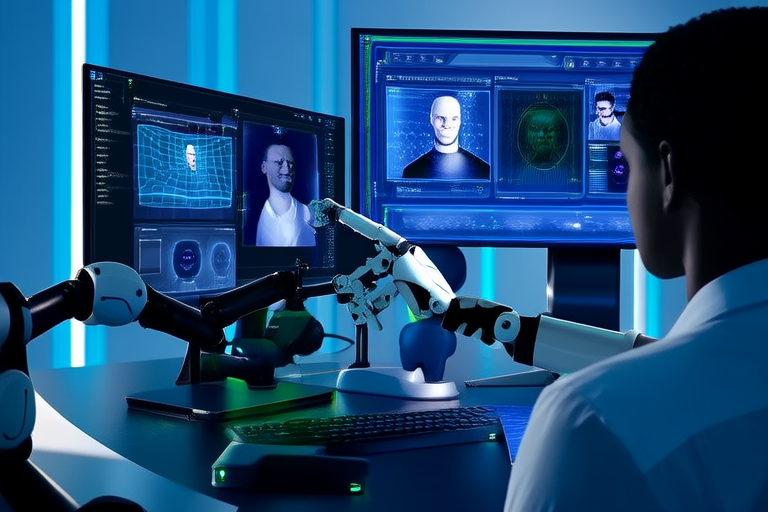
In the context of AI, computer vision serves as a critical tool for enhancing HMI. By allowing machines to interpret visual inputs, computer vision enables more natural and intuitive interactions between humans and AI systems. For example, facial recognition technology uses computer vision to identify individuals based on their facial features, while gesture control systems rely on it to interpret hand movements.
Improving User Experience
Computer vision plays a crucial role in making AI systems more user-friendly. By providing machines with the ability to perceive and respond to visual cues, computer vision enhances the overall user experience. For instance, object detection systems can help users find items in cluttered environments, while augmented reality interfaces overlay digital information onto the physical world.
Examples of AI Systems Using Computer Vision
Several AI systems leverage computer vision to improve interaction. Facial recognition technology, for example, allows for secure authentication and personalized experiences. Gesture control systems enable users to interact with devices without needing physical contact. Object detection systems assist in tasks ranging from inventory management to autonomous navigation.
Role of Deep Learning and Neural Networks
Deep learning, particularly through the use of CNNs, has been instrumental in advancing computer vision. These neural networks are capable of automatically learning and extracting features from raw pixel data, making them highly effective for tasks such as image classification, object detection, and facial recognition.
Benefits of Computer Vision in HMI
Intuitive and Accessible Interactions
Computer vision makes AI systems more intuitive and accessible by enabling machines to understand and respond to visual inputs. This leads to more natural and seamless interactions between humans and machines. For example, augmented reality interfaces can provide users with real-time information about their surroundings, enhancing situational awareness.
Improvements in Accuracy, Speed, and Efficiency
By leveraging computer vision, AI systems can achieve higher levels of accuracy, speed, and efficiency. Machine learning models trained on large datasets can quickly and accurately identify objects, faces, and gestures, leading to faster and more reliable interactions. Additionally, computer vision enables machines to adapt to changing environments, further improving performance.
Natural and Seamless Interactions
One of the primary benefits of computer vision is its ability to enable more natural and seamless interactions. Instead of relying on traditional input methods like keyboards and mice, computer vision allows users to interact with machines using gestures, facial expressions, and even eye movements. This creates a more immersive and engaging experience.
Potential Future Developments
The future of computer vision holds great promise, with ongoing research aimed at improving accuracy, reducing computational requirements, and expanding applications. Advancements in areas such as real-time processing, multi-modal perception, and edge computing will likely lead to even more sophisticated and integrated systems.
Challenges and Ethical Considerations
Implementation Challenges
Despite its many advantages, the implementation of computer vision for HMI comes with several challenges. One major concern is data privacy, as systems that rely on facial recognition or other biometric data may raise privacy issues. Bias in machine learning models is another challenge, as errors in recognition can disproportionately affect certain groups. Additionally, security concerns arise when sensitive data is involved.
Ethical Considerations
The ethical implications of computer vision in AI are significant. Surveillance systems that use facial recognition, for instance, raise questions about privacy and civil liberties. It is essential to address these concerns through transparent policies and regulations. Furthermore, ensuring fairness and accountability in AI systems that use computer vision is crucial to maintaining public trust.
Solutions and Best Practices
To mitigate these challenges, several best practices can be adopted. Ensuring data privacy through encryption and anonymization is one approach. Regular audits and testing of machine learning models can help reduce bias. Transparency in how systems operate and the data they collect is also vital. Finally, involving diverse stakeholders in the development and deployment of AI systems can help ensure ethical and responsible use.
Conclusion
In conclusion, computer vision plays a vital role in enhancing human-machine interaction within the realm of AI. By enabling machines to interpret and respond to visual inputs, computer vision significantly improves the user experience. Its applications span a wide range of industries, from healthcare to entertainment, and its potential for future advancements is immense. However, challenges such as data privacy, bias, and security must be addressed to ensure ethical and responsible use. As we continue to explore the possibilities of computer vision, it is clear that its impact on society will be profound.