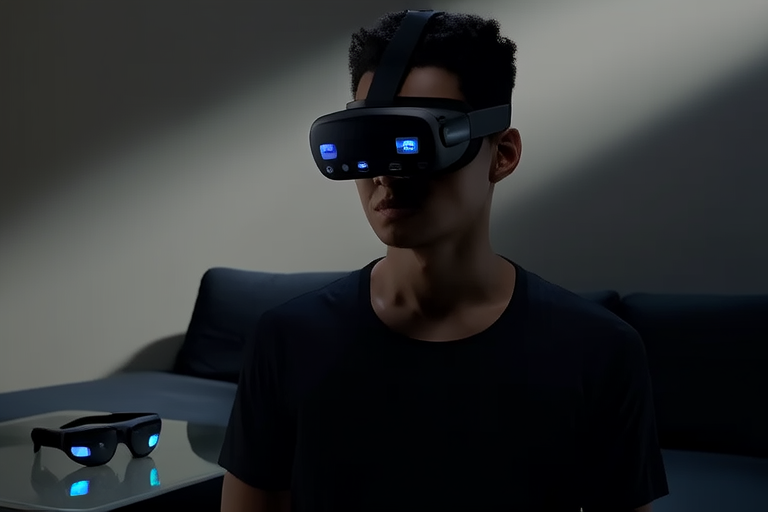

Immersive Experiences Await: Discovering the Potential of VR and AR Today
Introduction
Virtual Reality (VR) and Augmented Reality (AR) have emerged as transformative technologies, offering users immersive experiences that blur the lines between the digital and physical worlds. VR immerses users completely in a simulated environment, while AR overlays digital information onto the real world. These technologies are no longer confined to science fiction; they are increasingly integrated into various industries, revolutionizing entertainment, healthcare, education, retail, and real estate.
The growing popularity of immersive experiences has been driven by advancements in technology, making VR and AR more accessible and user-friendly. As these technologies continue to evolve, they promise to redefine the way we interact with information, engage with media, and even conduct our daily activities.
Current Applications
Entertainment
In the realm of entertainment, VR and AR have opened up new frontiers for gaming, movies, and live events. Gaming, in particular, has seen significant growth, with platforms like Oculus Rift and HTC Vive providing players with highly realistic and interactive environments. Movies and television shows are also leveraging AR to create interactive experiences, allowing viewers to engage with characters and storylines in novel ways.
Healthcare
The healthcare industry has embraced VR and AR for training, therapy, and surgical simulations. Medical professionals can now practice complex procedures in a risk-free virtual environment, enhancing their skills and confidence. Additionally, VR therapy is being used to treat conditions such as PTSD, phobias, and chronic pain, offering patients personalized treatment plans that are both effective and non-invasive.
Education
Education has benefited from VR and AR through the introduction of virtual classrooms and interactive learning tools. Students can explore historical sites, participate in virtual labs, and engage in collaborative projects that were previously impossible. These technologies make learning more engaging and accessible, particularly for students with disabilities or those in remote locations.
Retail
Retailers are using VR and AR to enhance customer experiences, offering virtual try-ons and 3D product visualizations. This not only improves the shopping experience but also reduces returns and increases customer satisfaction. AR apps allow customers to visualize products in their homes before purchasing, ensuring a better fit and reducing the need for physical samples.
Real Estate
In the real estate sector, VR and AR enable virtual tours and 3D property visualizations, allowing potential buyers to explore properties remotely. This is especially beneficial during times when physical visits are restricted, such as during a pandemic. Moreover, AR can be used to overlay property details, such as floor plans and dimensions, directly onto the physical space, providing a comprehensive view of the property.
Technological Advancements
Recent advancements in VR and AR hardware have significantly improved user experiences. Headsets now offer higher resolutions, more comfortable designs, and advanced haptic feedback, making them more immersive and less cumbersome. For example, the latest generation of VR headsets provides sharper visuals and more accurate tracking, enhancing the realism of virtual environments.
Software developments have also played a crucial role in improving user experience. Improved graphics and more intuitive interfaces ensure smoother navigation and interaction within virtual spaces. Developers are continuously refining algorithms to optimize performance, reduce latency, and enhance realism, making VR and AR systems more responsive and enjoyable to use.
Challenges and Limitations
Despite their potential, VR and AR face several challenges and limitations. One of the most common issues is motion sickness, which can occur when there is a disconnect between the visual and vestibular systems. To address this, developers are exploring techniques such as predictive rendering and adaptive frame rates to minimize motion-related discomfort.
Cost remains another barrier to widespread adoption. High-end VR and AR devices can be expensive, limiting their availability to a niche market. However, as technology matures and production scales, prices are expected to decrease, making these technologies more accessible to a broader audience.
Accessibility is also a concern, as not all users may have the necessary equipment or physical ability to fully engage with VR and AR. Efforts are underway to develop more inclusive solutions, such as voice-activated controls and adaptive input devices, to ensure that everyone can benefit from these technologies.
Future Potential
The potential of VR and AR extends beyond their current applications. In the coming years, these technologies are likely to play a significant role in remote collaboration, virtual travel, and social interactions. Imagine attending a conference or meeting virtually, where participants can interact in a shared digital space, regardless of their geographical location. This could revolutionize how businesses operate and collaborate globally.
Virtual travel experiences are another exciting possibility. Users could explore distant lands, visit museums, or attend events from the comfort of their homes, experiencing the sights, sounds, and even smells of faraway destinations. Social interactions in VR and AR could also transform the way we connect with friends and family, offering more immersive and engaging ways to stay connected.
As these technologies continue to evolve, we can expect more sophisticated systems that integrate seamlessly into our daily lives, offering new opportunities for creativity, productivity, and entertainment.
Conclusion
VR and AR have already made significant strides in transforming various industries, offering immersive experiences that were once thought impossible. From entertainment to healthcare, education to retail, and real estate to remote collaboration, these technologies are poised to reshape the way we interact with the world around us.
While challenges remain, ongoing advancements in hardware and software are paving the way for more accessible and user-friendly solutions. As we look to the future, the potential of VR and AR seems limitless, promising to enrich our lives in ways we have yet to imagine. Whether you’re a professional looking to innovate in your field or an individual seeking new forms of entertainment and engagement, embracing the potential of VR and AR is sure to open up a world of possibilities.