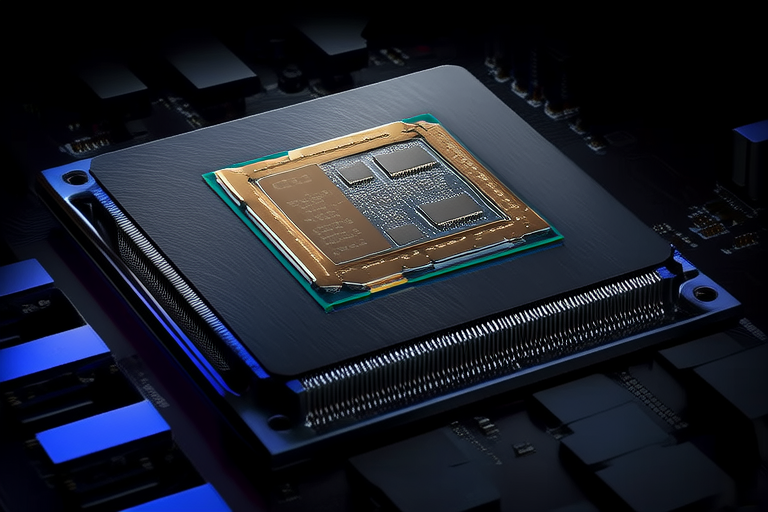

A Deep Dive into Modern CPU Architectures and Their Impact on System Speed
Introduction
The Central Processing Unit (CPU) is the brain of a computer, responsible for executing instructions and performing calculations that drive software applications. Over the years, advancements in CPU design have significantly influenced system performance, making computers faster, more efficient, and capable of handling increasingly complex tasks. This article explores the intricacies of modern CPU architectures and their impact on system speed.
To fully appreciate the significance of CPU architectures, it is essential to understand some key terms:
- Clock Speed: The rate at which a CPU executes instructions, measured in gigahertz (GHz).
- Cores: Independent processing units within a CPU that can handle multiple tasks simultaneously.
- Threads: Virtual processing units that allow each core to handle multiple tasks concurrently.
- Cache: A small, fast memory area used to store frequently accessed data to reduce retrieval times.
- The set of instructions a CPU can execute.
Section 1: Understanding CPU Architecture Basics
The fundamental components of a CPU include the Arithmetic Logic Unit (ALU), Control Unit, and Registers. The ALU performs arithmetic and logical operations, while the Control Unit manages the flow of data and instructions. Registers are small storage areas within the CPU that hold data temporarily during processing.
Clock speed, cores, and threads play crucial roles in determining CPU performance. Clock speed measures the frequency at which the CPU operates, while cores and threads enable parallel processing, allowing the CPU to handle multiple tasks simultaneously. Different types of CPU architectures, such as Complex Instruction Set Computing (CISC) and Reduced Instruction Set Computing (RISC), offer distinct advantages. CISC uses a larger set of instructions, providing flexibility and ease of programming, while RISC simplifies instructions, enhancing speed and efficiency.
Section 2: Modern CPU Architectural Innovations
Recent advancements in CPU architectures have revolutionized system performance. Multi-core processors, hyper-threading, and advanced caching techniques are just a few examples of these innovations. Multi-core processors feature multiple independent processing units, enabling simultaneous task execution. Hyper-threading allows each core to handle multiple threads, further boosting performance. Advanced caching techniques, such as inclusive and exclusive caches, improve data access speeds and reduce latency.
Features like out-of-order execution, branch prediction, and speculative execution enhance performance by optimizing instruction processing. Out-of-order execution allows the CPU to execute instructions in a non-sequential order, improving throughput. Branch prediction anticipates the outcome of conditional branches, reducing wait times. Speculative execution pre-fetches instructions based on predicted outcomes, minimizing delays.
Specific examples of cutting-edge technologies include AMD’s Zen architecture and Intel’s Core series innovations. AMD’s Zen architecture focuses on improving performance per watt, delivering higher efficiency and better scalability. Intel’s Core series introduces advanced features like Intel Turbo Boost, which dynamically increases clock speeds under load, and Intel Thread Director, which optimizes thread allocation for better performance.
Section 3: Impact on System Speed and Performance
These architectural improvements translate into faster and more efficient systems. Modern CPUs excel at multitasking, gaming, and heavy computational tasks. They can handle multiple applications simultaneously without significant slowdowns, ensuring smooth user experiences. In gaming, modern CPUs provide seamless frame rates and reduced input lag, enhancing immersion. For heavy computational tasks, such as video rendering and scientific simulations, modern CPUs deliver impressive performance gains, reducing processing times significantly.
In real-world applications, the performance differences between various architectures are notable. For instance, AMD’s Ryzen processors often outperform Intel’s counterparts in gaming and multithreaded workloads, while Intel’s CPUs excel in single-threaded tasks and certain professional applications. These differences highlight the importance of selecting the right CPU for specific use cases.
Section 4: Future Trends and Challenges
Emerging trends in CPU design include heterogeneous computing, specialized cores for AI processing, and energy efficiency improvements. Heterogeneous computing combines different types of processors within a single system, optimizing performance for specific tasks. Specialized cores for AI processing accelerate machine learning algorithms, driving advancements in artificial intelligence. Energy efficiency improvements focus on reducing power consumption, extending battery life and lowering operational costs.
Potential challenges in scaling CPU performance further include thermal management and manufacturing limitations. As CPUs become more powerful, they generate more heat, requiring advanced cooling solutions. Manufacturing limitations, such as shrinking transistor sizes, pose additional challenges. Addressing these challenges will be crucial for continued progress in CPU design.
Conclusion
This article has explored the intricacies of modern CPU architectures and their impact on system speed. From fundamental components to cutting-edge innovations, CPUs continue to evolve, driving system performance and overall computing capabilities. As technology advances, staying updated with the latest developments in CPU design will be essential for both technical enthusiasts and general readers interested in understanding the profound impact of CPU architecture on system speed.
The ongoing importance of CPU architecture advancements cannot be overstated. As we look to the future, the rapid evolution of CPU design promises even greater performance and efficiency, shaping the computing landscape for years to come. We encourage readers to stay informed and engaged with this ever-evolving field.