
The Immersive Experience: Unveiling New Frontiers in VR and AR Technology
Introduction
Virtual Reality (VR) and Augmented Reality (AR) have emerged as two of the most exciting and transformative technologies of our time. These immersive experiences offer users the ability to step into entirely new worlds or overlay digital information onto the real world, revolutionizing the way we interact with technology. From gaming and entertainment to healthcare and education, VR and AR are poised to reshape countless industries. What began as niche technologies has evolved into powerful tools that promise to enhance productivity, improve learning outcomes, and provide unprecedented levels of engagement.
Understanding VR and AR
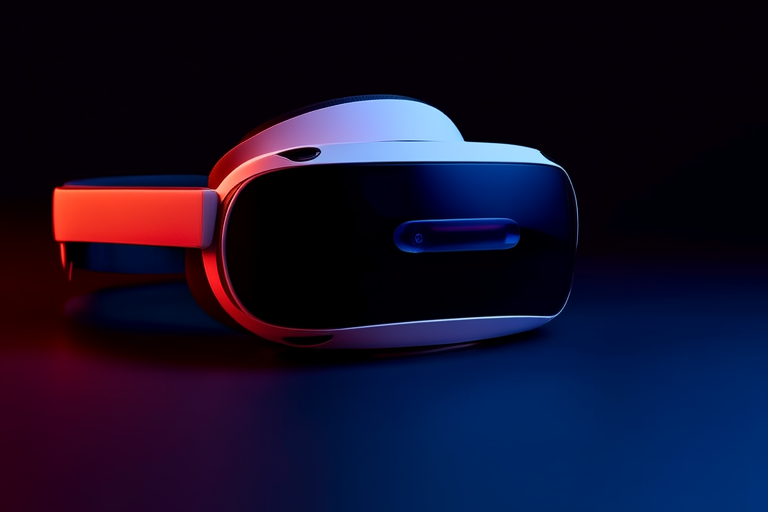
Virtual Reality (VR) involves creating a completely simulated environment where users can explore and interact with through specialized headsets. These headsets, equipped with high-resolution displays and motion sensors, track the user’s movements and provide a fully immersive experience. In contrast, Augmented Reality (AR) overlays digital elements onto the physical world, enhancing the user’s perception of reality. This technology typically uses smartphones, tablets, or smart glasses to deliver interactive content.
The core components of VR include headsets, controllers, and powerful computers or consoles. VR headsets, like the Oculus Rift or HTC Vive, feature dual screens that create stereoscopic images, giving the illusion of depth. Motion sensors and tracking systems ensure that the virtual environment responds accurately to the user’s movements. Software platforms, such as Unity and Unreal Engine, allow developers to build complex and realistic environments.
AR, on the other hand, relies on devices like smartphones, tablets, or smart glasses. These devices use cameras and sensors to detect the user’s surroundings and overlay digital content. Popular AR platforms include Apple’s ARKit and Google’s ARCore, which enable developers to create applications that interact with the physical environment in real-time. Both VR and AR leverage advanced algorithms and graphics processing units (GPUs) to render realistic visuals and enhance user immersion.
Applications Across Industries
Entertainment and Gaming
One of the earliest and most popular applications of VR and AR is in the entertainment sector, particularly gaming. VR offers players an unparalleled level of immersion, allowing them to step into the game world and interact with it as if they were truly there. Games like Half-Life: Alyx and Beat Saber have demonstrated the potential of VR to create deeply engaging and immersive experiences. Meanwhile, AR games like Pokemon Go have captured the imagination of millions by bringing digital creatures into the real world.
Healthcare and Medical Training
In healthcare, VR and AR are being used to train medical professionals, simulate surgeries, and assist in patient care. Surgeons can practice complex procedures in a risk-free environment using VR simulations, while AR can help guide doctors during operations by overlaying critical information onto the patient’s body. Additionally, VR therapy is being explored as a treatment for conditions like PTSD and anxiety disorders.
Retail and E-commerce
AR is transforming retail and e-commerce by enabling customers to visualize products in their own homes before making a purchase. Apps like IKEA Place allow users to place virtual furniture in their living spaces, helping them make informed decisions. Similarly, AR try-on features in fashion and beauty applications provide a more personalized shopping experience.
Education and Training
VR and AR are revolutionizing education by providing interactive and engaging learning experiences. Students can explore historical events, visit distant planets, or even perform virtual dissections. These technologies also offer hands-on training for professions like aviation, automotive repair, and construction, ensuring that learners gain practical skills in a safe and controlled environment.
Architecture and Engineering
Architects and engineers are leveraging VR and AR to design and visualize buildings and infrastructure projects. VR allows stakeholders to walk through proposed structures before they are built, identifying potential issues and refining designs. AR, on the other hand, enables construction workers to see digital blueprints overlaid onto physical sites, streamlining the building process.
Tourism and Travel
Tourism is another sector benefiting from VR and AR. Travelers can now virtually tour destinations, experience cultural landmarks, and even book accommodations using AR. Virtual tours provide an engaging way to explore remote locations, while AR guides can enhance the visitor experience at museums and historical sites.
Advancements in Technology
Recent advancements in VR and AR technology have significantly improved the user experience. Higher resolutions and wider fields of view make virtual environments more realistic and less prone to motion sickness. Enhanced tracking accuracy ensures precise movement detection, while haptic feedback adds a tactile dimension to interactions. Innovations in hardware, such as lighter and more comfortable headsets, and advancements in software, like machine learning algorithms for real-time rendering, are pushing the boundaries of immersion.
Companies like Valve, Microsoft, and Magic Leap are at the forefront of developing cutting-edge VR and AR solutions. Valve’s Index headset boasts superior visual fidelity and ergonomic design, while Microsoft’s HoloLens 2 introduces advanced spatial mapping and gesture recognition. Magic Leap’s light projection technology promises to deliver more natural and seamless AR experiences.
Challenges and Future Prospects
Despite the promising advancements, several challenges remain for widespread VR and AR adoption. High costs, limited accessibility, and concerns about user comfort are significant barriers. However, as technology continues to evolve and prices decrease, these obstacles are expected to diminish. Future developments may include more affordable and versatile devices, improved social interaction features, and enhanced collaboration tools.
Looking ahead, VR and AR could merge into a single technology, offering users the best of both worlds. Advances in brain-computer interfaces and neural networks could further blur the lines between the virtual and physical realms. As these technologies continue to mature, we can expect to see increasingly sophisticated applications that push the boundaries of human experience.
Conclusion
The immersive experience offered by VR and AR technologies holds immense potential to transform industries and enrich human interaction. From enhancing educational experiences to revolutionizing healthcare practices, these technologies are poised to play a pivotal role in shaping the future. While challenges remain, ongoing advancements suggest a bright future for VR and AR, promising to redefine how we engage with the world around us.