
Exploring the Latest Trends in Desktop Computer Components
Introduction
Staying updated with the latest trends in desktop computer components is crucial for anyone looking to maximize performance, efficiency, and user experience. As technology continues to advance, the landscape of desktop computing evolves at an unprecedented pace. Innovations in hardware design, manufacturing processes, and software integration have led to significant improvements in performance, energy efficiency, and user experience. This article delves into the latest trends across various key components, providing insights that can help you make informed decisions when building or upgrading your desktop PC.
CPU (Central Processing Unit)
The Central Processing Unit (CPU) remains the heart of any computer system, responsible for executing instructions and managing tasks. Recent advancements in CPU architecture have introduced several improvements, including increased core counts, higher clock speeds, and enhanced energy efficiency. Multi-core processors have become more prevalent, allowing for better multitasking and parallel processing. Hyper-threading technology, which enables each physical core to handle multiple threads simultaneously, has also been refined, further boosting performance.
Integrated AI acceleration is another significant innovation, offering enhanced performance for machine learning and artificial intelligence tasks. Major manufacturers like Intel and AMD continue to release cutting-edge CPUs. For instance, Intel’s 13th generation Core processors feature improved performance and power efficiency, while AMD’s Ryzen series offers competitive pricing and impressive performance per watt.
GPU (Graphics Processing Unit)
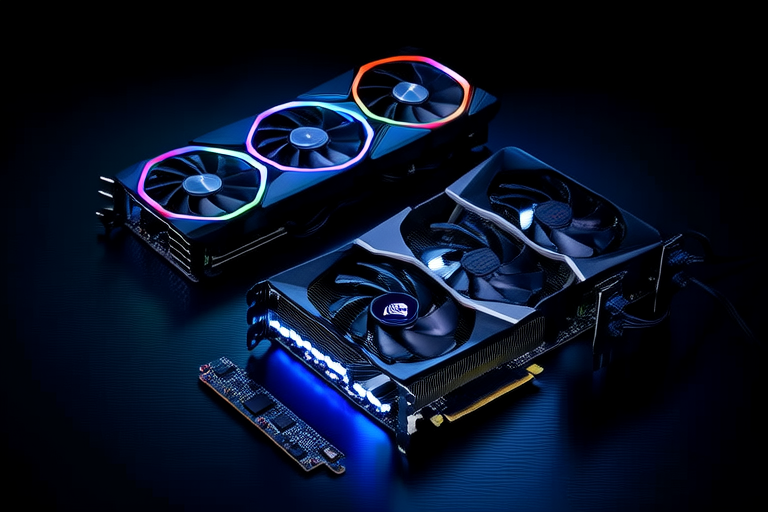
The Graphics Processing Unit (GPU) plays a critical role in rendering graphics, especially in gaming and professional applications. Recent developments in GPU technology have focused on performance enhancements, ray tracing capabilities, and power efficiency. Gaming GPUs now offer higher frame rates and more realistic visuals thanks to advancements in ray tracing, which simulates the behavior of light to create more lifelike scenes.
Professional graphics cards have also seen significant improvements, catering to industries like video editing, 3D modeling, and scientific research. Notable releases from NVIDIA include the RTX 40 series, which delivers exceptional performance and support for real-time ray tracing. AMD’s Radeon RX 7000 series also competes strongly, offering competitive pricing and excellent performance for both gaming and professional applications.
RAM (Random Access Memory)
Random Access Memory (RAM) is essential for handling data and applications efficiently. The evolution of RAM has seen the introduction of faster data transfer rates and increased capacity options. DDR5 memory, the latest generation, offers significant improvements over its predecessors, providing higher bandwidth and lower latency. This translates to faster data access and improved multitasking capabilities.
Higher RAM capacities are particularly beneficial for users who run resource-intensive applications or multitask frequently. With more RAM available, the system can handle larger datasets and more complex tasks without compromising performance. As DDR5 becomes more widespread, it will likely become the standard for high-performance desktop builds.
Storage Solutions
Storage solutions have evolved significantly, moving away from traditional Hard Disk Drives (HDDs) towards Solid State Drives (SSDs). SSDs offer superior speed and reliability, making them ideal for modern computing needs. While HDDs remain cost-effective for large storage capacities, SSDs provide faster read and write speeds, reducing boot times and application load times.
NVMe (Non-Volatile Memory Express) technology has further enhanced SSD performance by optimizing data transfer protocols. PCIe Gen 4/5 interfaces are also gaining traction, promising even faster data transfer rates. These advancements in storage technology ensure that data can be accessed quickly and reliably, contributing to an overall smoother user experience.
Motherboards
The motherboard serves as the central hub that connects all components of a desktop PC. Its role in ensuring seamless communication between these components cannot be overstated. Recent advancements in motherboard design have focused on improving cooling solutions, power delivery systems, and connectivity options.
Enhanced cooling solutions, such as better heat sinks and advanced airflow designs, help maintain stable operating temperatures, preventing overheating and prolonging component lifespan. Improved power delivery systems ensure reliable power supply to all components, while enhanced connectivity options, such as Wi-Fi 6E and USB 4, provide faster and more versatile data transfer capabilities.
Cooling Systems
Efficient cooling is essential for maintaining system stability and longevity. The latest trends in cooling solutions include liquid cooling, advanced air cooling systems, and innovations in thermal paste. Liquid cooling systems, such as AIO (All-In-One) coolers and custom loops, offer superior cooling performance compared to traditional air coolers.
Advanced air cooling systems, featuring larger heatsinks and high-performance fans, also contribute to effective heat dissipation. Innovations in thermal paste, such as graphene-based compounds, enhance heat conductivity, further improving cooling efficiency. Efficient cooling ensures that components operate within safe temperature ranges, preventing damage and extending the life of the system.
Power Supplies
A high-efficiency power supply unit (PSU) is vital for modern desktop builds, ensuring stable and reliable power delivery to all components. Modular PSUs allow for flexible cable management, reducing clutter and improving airflow. 80 Plus certifications, indicating efficiency levels, are increasingly common, with higher ratings (like 80 Plus Titanium) offering better energy efficiency.
The rise of digital power supplies, which use microprocessors to control power delivery, offers greater precision and efficiency. These advancements in PSU technology contribute to a more stable and energy-efficient desktop system, benefiting both performance and environmental sustainability.
Conclusion
In conclusion, the world of desktop computer components is constantly evolving, driven by advancements in technology and user demand. From CPUs with improved architectures to GPUs with enhanced ray tracing capabilities, each component plays a crucial role in delivering optimal performance and user experience. Staying informed about the latest trends can help you make the best choices when building or upgrading your desktop PC, ensuring it remains powerful, efficient, and future-proof.
By understanding the importance of each component and its advancements, you can build a system that meets your current needs while being prepared for future challenges. Whether you’re a gamer, professional, or casual user, keeping up with these trends will undoubtedly benefit your computing experience.