
Revolutionizing Industries: The Impact of Computer Vision Today
Introduction
Computer vision, a field of artificial intelligence (AI) that enables machines to interpret and understand visual information from the world, has become increasingly important in today’s technological landscape. By leveraging advanced algorithms and powerful hardware, computer vision systems can analyze images and videos to extract meaningful insights, automate tasks, and enhance decision-making processes. This technology has found applications across numerous industries, transforming everything from healthcare and manufacturing to retail and automotive.
What is Computer Vision?
At its core, computer vision involves teaching machines to perceive, understand, and interact with the world through visual data. It combines image processing, pattern recognition, and machine learning techniques to enable systems to identify objects, recognize faces, track movements, and make predictions based on visual inputs. Key technologies underpinning computer vision include neural networks, deep learning, and convolutional neural networks (CNNs), which allow machines to learn from vast amounts of labeled data and improve their accuracy over time.
Applications Across Industries
Healthcare
In healthcare, computer vision is revolutionizing medical imaging by enabling more accurate diagnoses and treatments. For instance, it is used in analyzing MRI and CT scans to detect diseases such as cancer, Alzheimer’s, and heart conditions. Additionally, computer vision assists in surgical procedures by providing real-time guidance to surgeons, enhancing precision and reducing human error. Robotic surgery, another application, leverages computer vision to perform complex operations with minimal invasiveness.
Manufacturing
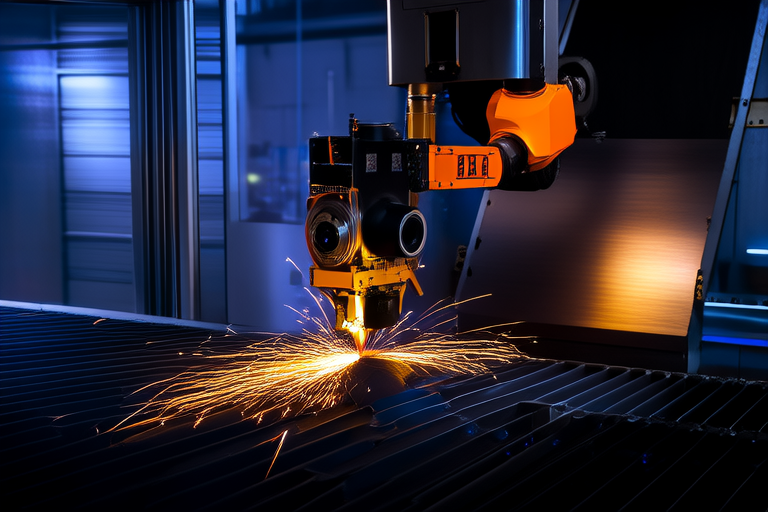
The manufacturing sector benefits significantly from computer vision through enhanced quality control and inspection processes. By automating production lines, computer vision ensures that products meet stringent quality standards, reducing waste and improving efficiency. Predictive maintenance, enabled by computer vision, helps manufacturers anticipate equipment failures before they occur, minimizing downtime and maintenance costs. Real-world examples include automotive plants using computer vision to inspect parts and electronics manufacturers employing it for defect detection.
Retail
Computer vision is transforming the retail industry by enabling cashier-less stores, where customers can simply pick up items and leave without interacting with checkout counters. Inventory management systems powered by computer vision ensure that shelves are always stocked, while customer behavior analysis provides valuable insights into purchasing patterns. Personalized marketing campaigns are also made possible through computer vision, allowing retailers to tailor offers to individual preferences. Companies like Amazon Go and Alibaba have successfully implemented these technologies to enhance the shopping experience.
Automotive
The automotive industry is at the forefront of adopting computer vision, particularly in the realm of autonomous driving and advanced driver-assistance systems (ADAS). These systems rely on computer vision to perform critical functions such as lane detection, object recognition, and collision avoidance. As autonomous vehicles continue to develop, computer vision will play an even greater role in ensuring safe and efficient transportation. Current advancements include adaptive cruise control, pedestrian detection, and traffic sign recognition, while future possibilities include fully autonomous vehicles navigating urban environments.
Security & Surveillance
Computer vision is widely used in security and surveillance applications, including facial recognition and other biometric authentication methods. These technologies help monitor crowds, detect anomalies, and provide real-time alerts in case of suspicious activities. Smart city initiatives leverage computer vision to optimize traffic flow, enhance public safety, and manage resources efficiently. However, ethical considerations such as privacy concerns and potential misuse of surveillance data must be addressed to ensure responsible implementation.
Agriculture
Precision farming techniques are becoming increasingly prevalent in agriculture, thanks to computer vision-enabled drones and sensors. These tools assist farmers in monitoring crop health, predicting yields, and detecting pests early on. By providing actionable insights, computer vision helps optimize resource usage, reduce environmental impact, and increase productivity. Successful implementations include using computer vision to assess soil moisture levels and monitor plant growth patterns.
Challenges and Ethical Considerations
Despite its many advantages, computer vision faces several challenges, including data privacy, security, and algorithmic bias. Ensuring that personal data is protected and used responsibly is crucial, especially when deploying surveillance systems. Ethical concerns around privacy violations and potential misuse of facial recognition technology must be carefully managed. Additionally, the potential for job displacement due to automation raises important social questions. Regulatory frameworks and standards are being developed to address these issues and promote responsible use of computer vision technology.
Future Outlook
The future of computer vision holds immense promise, with ongoing research and development expected to drive significant advancements. Potential breakthroughs include improved accuracy in image recognition, enhanced real-time processing capabilities, and more sophisticated AI models capable of handling complex tasks. As computer vision continues to evolve, its impact on various industries will grow, leading to new opportunities and innovations. Upcoming research areas include developing more robust algorithms that can operate in challenging environments and exploring novel applications in emerging fields.
Conclusion
Computer vision is reshaping industries by enabling smarter, faster, and more accurate solutions to complex problems. From healthcare to agriculture, its applications are diverse and transformative. While challenges remain, the potential benefits far outweigh the risks, making computer vision one of the most exciting and impactful technologies of our time. As we move forward, continued investment in research and development will further unlock its potential, paving the way for a future where machines see the world as clearly as humans do.