
How New Motherboard Features Are Revolutionizing PC Building
Introduction
The motherboard is the central hub of any personal computer, acting as the backbone that connects all the essential components. It plays a crucial role in determining the overall performance, compatibility, and expandability of a PC. Over the years, advancements in motherboard technology have significantly transformed the PC building landscape, enabling users to build systems that are faster, more powerful, and more versatile than ever before.
This article delves into the recent advancements in motherboard technology and their profound impact on personal computer building. We will explore key features that are currently driving innovation, including advanced connectivity options, improved power delivery systems, enhanced cooling solutions, integrated software and BIOS enhancements, future-proofing and scalability, and environmental considerations. By understanding these advancements, you’ll gain valuable insights into how new motherboard features are revolutionizing the way we build and use personal computers.
Advanced Connectivity Options
One of the most significant changes in modern motherboards is the integration of advanced I/O ports, such as USB-C, Thunderbolt, PCIe slots, and M.2 connectors. These new ports offer unprecedented flexibility and speed, allowing users to connect a wide range of peripherals and storage devices with ease.
USB-C ports, for example, provide reversible connectivity and support high-speed data transfer rates, making them ideal for charging devices and transferring large files. Thunderbolt ports offer even greater bandwidth, enabling users to connect external displays, storage drives, and other high-performance peripherals with minimal latency. Additionally, the inclusion of multiple PCIe slots allows for easy expansion of graphics cards and other add-in cards, while M.2 connectors provide fast and reliable solid-state drive (SSD) storage options.
These advancements in connectivity options enhance the overall performance and usability of modern PCs, making them more versatile and adaptable to a wide range of applications.
Improved Power Delivery Systems
Another critical area of advancement in modern motherboards is the power delivery system, which includes Voltage Regulator Modules (VRMs). These components are responsible for delivering stable and efficient power to the CPU and GPU, ensuring optimal performance and longevity.
New motherboards feature more efficient VRMs, which are designed to handle higher power loads with greater precision. This results in better stability during overclocking and heavy workloads, allowing users to push their systems to their limits without compromising reliability. Improved power delivery systems also contribute to lower temperatures and reduced noise, further enhancing the overall user experience.
With these advancements, users can build PCs that are capable of handling demanding tasks such as gaming, video editing, and scientific simulations with ease, while also enjoying increased system longevity and performance under heavy loads.
Enhanced Cooling Solutions
Heat management is a critical factor in ensuring the long-term performance and reliability of a PC. Modern motherboards come equipped with advanced cooling solutions that help keep components cool and efficient, even under extreme conditions.
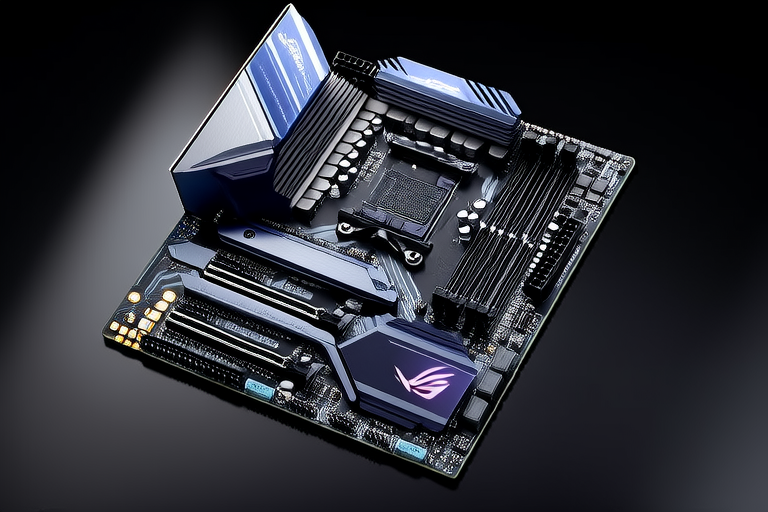
Many motherboards now feature larger heatsinks and integrated water-cooling headers, providing better heat dissipation and more effective cooling. Additionally, some motherboards include advanced thermal management features, such as automatic fan control and temperature-based throttling, which help maintain optimal operating temperatures.
These innovations contribute to improved system longevity and performance under heavy loads, ensuring that your PC remains cool and efficient even when running demanding applications or playing resource-intensive games.
Integrated Software and BIOS Enhancements
Modern motherboards come with integrated software interfaces and enhanced BIOS features that simplify the process of managing and optimizing your PC. User-friendly software interfaces allow users to easily monitor system health, manage hardware profiles, and perform various tuning tasks, such as overclocking and voltage adjustments.
Enhanced BIOS features, such as UEFI (Unified Extensible Firmware Interface), provide a more intuitive and powerful interface for configuring system settings. These features make it easier for users to customize their systems according to their specific needs, whether they’re building a high-performance gaming rig or a low-power home theater PC.
By leveraging these integrated tools, users can optimize their PCs for maximum performance and efficiency, while also simplifying the process of troubleshooting and maintaining system stability.
Future-Proofing and Scalability
One of the most important considerations when building a PC is ensuring that your system can easily adapt to future technological advancements. Modern motherboards are designed with this in mind, featuring a variety of design aspects that make them future-proof and highly scalable.
Many motherboards now support upcoming CPU architectures and memory standards, ensuring that users can upgrade their systems as new technologies become available. For example, some motherboards are designed to accommodate future generations of DDR5 RAM, providing users with the flexibility to upgrade their systems as new memory modules become available.
Additionally, the inclusion of multiple PCIe slots and M.2 connectors allows for easy expansion of graphics cards, storage drives, and other components, ensuring that users can build systems that are capable of adapting to changing demands and technological advancements.
Environmental and Sustainability Considerations
In addition to performance and functionality, modern motherboards also incorporate eco-friendly materials and energy-efficient designs that align with broader trends toward sustainable technology. Many motherboards now feature recycled materials, such as aluminum and plastic, reducing the environmental impact of their production.
Energy-efficient designs, such as low-power standby modes and optimized power delivery systems, help reduce energy consumption and lower electricity bills. These advancements not only benefit the environment but also provide tangible benefits to users in terms of cost savings and improved system performance.
By incorporating these eco-friendly features, modern motherboards help to promote sustainability and reduce the environmental footprint of personal computing.
Conclusion
In conclusion, the advancements in motherboard technology have had a profound impact on the PC building industry, enabling users to build systems that are faster, more powerful, and more versatile than ever before. From advanced connectivity options and improved power delivery systems to enhanced cooling solutions and integrated software enhancements, these new features are transforming the way we build and use personal computers.
As technology continues to evolve, we can expect to see even more innovative features and improvements in motherboard design. Whether you’re building a high-performance gaming rig or a low-power home theater PC, the latest advancements in motherboard technology are sure to deliver a superior user experience, making it easier than ever to build a PC that meets your specific needs and preferences.