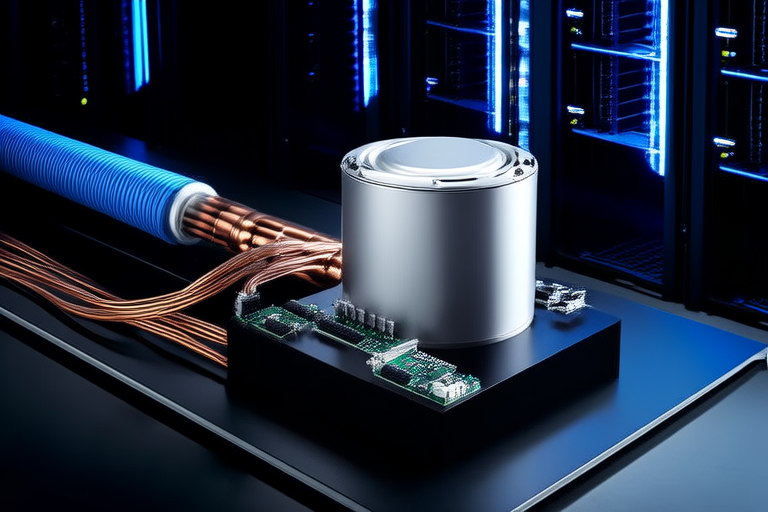

From Theory to Reality: Breaking Down Quantum Computing for Beginners
Introduction
Quantum computing represents a revolutionary shift in the way we process information. Unlike classical computers, which rely on binary bits (0s and 1s), quantum computers use quantum bits, or qubits, which can exist in multiple states simultaneously thanks to a principle called superposition. This unique capability allows quantum computers to solve certain types of problems much faster than classical computers.
The importance of quantum computing lies in its potential to tackle complex problems that are currently beyond the reach of classical systems. From enhancing cryptographic security to accelerating drug discovery and optimizing complex systems, the implications of quantum computing span numerous fields. As we delve deeper into this exciting technology, understanding its basics becomes crucial for anyone interested in the future of technology.
Key Concepts in Quantum Computing
Qubits
A qubit is the fundamental unit of quantum information, analogous to a bit in classical computing. However, unlike a classical bit, which can only be in one of two states (0 or 1), a qubit can exist in a superposition of both states at once. This property enables quantum computers to perform multiple calculations simultaneously, offering exponential increases in processing power for specific tasks.
Superposition and Entanglement
Superposition allows qubits to represent and process a vast amount of information at the same time. When qubits are entangled, the state of one qubit is directly related to the state of another, regardless of the distance between them. This phenomenon, known as entanglement, is a cornerstone of quantum computing, enabling complex computations and correlations that are impossible with classical bits.
Quantum Gates
Quantum gates are the building blocks of quantum circuits, similar to logic gates in classical computing. They manipulate qubits through operations that change their state based on superposition and entanglement. By applying a sequence of quantum gates, quantum computers can perform intricate computations that would be impractical or impossible for classical machines.
Quantum Algorithms
Shor’s Algorithm
Shor’s algorithm is a quantum algorithm designed to factor large numbers efficiently. This task is computationally intensive for classical computers, but Shor’s algorithm can significantly reduce the time required, posing a threat to widely used encryption methods like RSA. The ability to factor large numbers quickly could revolutionize cryptography and cybersecurity.
Grover’s Algorithm
Grover’s algorithm provides a quadratic speedup for searching unsorted databases. While a classical computer might need to check each item individually, Grover’s algorithm can find the target element more efficiently by leveraging quantum parallelism. This makes it particularly useful for optimization problems and database searches.
Both Shor’s and Grover’s algorithms demonstrate the potential of quantum computing to outperform classical counterparts in specific areas, highlighting the transformative power of quantum technologies.
Current State of Quantum Computing
Today, several companies and research institutions are actively developing quantum computers. Leaders like IBM, Google, and Microsoft have made significant strides in creating functional quantum systems. These systems, though still in their early stages, are already demonstrating capabilities that hint at future breakthroughs.
Ongoing research focuses on improving qubit stability, reducing error rates, and increasing coherence times. Collaborative efforts across academia and industry are driving innovation, with the goal of building practical, scalable quantum computers capable of solving real-world problems.
Challenges and Limitations
Despite its promise, quantum computing faces several challenges. High error rates and decoherence—where qubits lose their quantum state due to environmental interactions—are significant hurdles. Additionally, maintaining qubits in a stable state over extended periods remains difficult. These limitations necessitate robust error correction techniques and advanced cooling systems to ensure reliable operation.
While quantum computers excel in specific tasks, they are not universally superior to classical systems. For many everyday applications, classical computers remain the better choice. However, as research progresses, the gap between quantum and classical capabilities is expected to narrow, opening up new possibilities.
Future Prospects
The future of quantum computing holds immense potential. Advances in qubit technology and error correction will likely lead to more powerful and reliable quantum systems. These systems could transform industries by solving previously unsolvable problems, from optimizing supply chains to simulating molecular structures for drug discovery.
As quantum computing continues to evolve, it will become increasingly integrated into various sectors, driving innovation and reshaping the technological landscape. The ongoing research and development efforts suggest that the next few decades will see remarkable advancements, making quantum computing a cornerstone of future technology.
Conclusion
In summary, quantum computing represents a paradigm shift in computational power, offering solutions to complex problems that are currently beyond the reach of classical systems. By understanding the basics of qubits, superposition, entanglement, and quantum algorithms, we gain insight into the potential of this emerging technology.
As quantum computing continues to advance, its impact on fields like cryptography, drug discovery, and optimization will be profound. Embracing this knowledge equips us to navigate the exciting possibilities that lie ahead in the world of quantum technology.