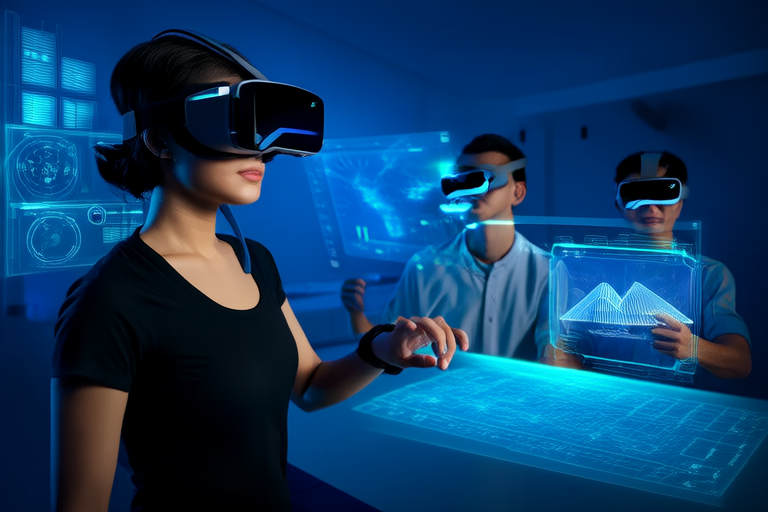

Enhancing User Experience: The Power of VR and AR in Modern Technology
Introduction
Virtual Reality (VR) and Augmented Reality (AR) are two groundbreaking technologies that are reshaping the way we interact with digital environments. While both involve immersive experiences, they serve distinct purposes. VR creates entirely new, computer-generated worlds that users can explore, whereas AR overlays digital information onto the real world, enhancing it with interactive elements.
These technologies are not just novelties; they are revolutionizing modern technology by offering unprecedented opportunities for innovation and user engagement. From healthcare to education, from entertainment to retail, VR and AR are transforming industries, providing immersive and interactive experiences that were once thought impossible.
Applications in Various Industries
Healthcare
In healthcare, VR and AR are being used to train medical professionals and provide patients with more personalized care. For example, VR simulators allow surgeons to practice complex procedures in a risk-free environment, improving their skills and reducing errors. AR applications assist doctors during surgeries by projecting patient data directly onto their field of view, enabling faster decision-making.
Education
The educational sector has also embraced VR and AR to enhance learning outcomes. These technologies offer students immersive, interactive experiences that make learning more engaging and effective. For instance, history students can virtually visit ancient civilizations, while science students can conduct experiments in a safe virtual lab. This approach fosters deeper understanding and retention of material.
Entertainment
Entertainment is one of the most prominent sectors benefiting from VR and AR. Video games have been at the forefront of this revolution, offering players immersive, interactive experiences that transport them into fantastical worlds. Additionally, VR and AR are being used to create unique movie-watching experiences, theme park attractions, and live events. These technologies are pushing the boundaries of what is possible in the entertainment industry.
Retail
Retailers are leveraging VR and AR to enhance customer experiences and drive sales. Customers can now try on clothes virtually, visualize furniture in their homes, or even take virtual tours of stores. These tools provide a more personalized shopping experience, helping customers make informed decisions and increasing satisfaction.
Manufacturing
In manufacturing, VR and AR are used to design and test products before production, reducing costs and improving efficiency. Workers can use AR headsets to access manuals and instructions, streamlining assembly processes. Furthermore, VR simulations are employed to train employees on safety protocols and machinery operation, minimizing risks and accidents.
User Experience Enhancements
VR and AR significantly enhance user engagement, immersion, and interaction. They create an environment where users are fully immersed in the experience, making it more memorable and impactful. By allowing users to interact with digital environments in real-time, these technologies foster a sense of presence and control.
The emotional and cognitive benefits of VR and AR are profound. They stimulate creativity, curiosity, and problem-solving skills. Users feel more connected to the content they are experiencing, leading to increased empathy and understanding. Moreover, these technologies can reduce stress and anxiety by providing therapeutic environments for relaxation and mindfulness.
Challenges and Future Prospects
Despite their immense potential, VR and AR face several challenges. One of the primary obstacles is the cost of high-quality hardware, which can be prohibitive for many users and businesses. Additionally, the limited availability of compatible devices and software hinders widespread adoption. Privacy concerns and data security issues also pose significant challenges.
However, the future looks promising. Emerging trends and innovations are addressing these challenges. Advancements in hardware, such as lighter and more affordable headsets, are making VR and AR more accessible. Software developers are creating more intuitive and user-friendly applications, expanding the range of industries that can benefit from these technologies. As these barriers are overcome, VR and AR will become integral components of everyday life.
Conclusion
Virtual Reality and Augmented Reality are transforming the way we interact with technology, offering immersive and engaging experiences that enhance user satisfaction and engagement. Across healthcare, education, entertainment, retail, and manufacturing, these technologies are revolutionizing industries and providing innovative solutions to complex problems.
While there are challenges to overcome, the potential of VR and AR is immense. As hardware becomes more affordable and accessible, and software continues to evolve, these technologies will play an increasingly important role in shaping the future of user experience in modern technology. The impact of VR and AR is undeniable, and their influence will only continue to grow.