
Exploring the Latest Innovations in Computer Hardware Components
Introduction
The rapid advancement of computer hardware components has been pivotal in driving progress across various industries and enhancing our daily lives. From gaming and scientific research to business applications and entertainment, the performance and efficiency of computers directly influence productivity and innovation. This article delves into the latest innovations in key hardware components, including Central Processing Units (CPUs), Graphics Processing Units (GPUs), memory technologies, storage solutions, and cooling systems. These advancements not only enhance computational power but also improve energy efficiency, reliability, and user experience.
1. Central Processing Units (CPUs)
Central Processing Units (CPUs) are the brain of a computer, responsible for executing instructions and managing data flow. Recent breakthroughs in CPU architecture have significantly improved performance while maintaining or even reducing power consumption. Leading manufacturers such as Intel and AMD have introduced cutting-edge processors that boast higher clock speeds, increased core counts, and enhanced power efficiency. For instance, Intel’s 12th Gen Core processors feature a hybrid architecture combining Performance and Efficient cores, delivering superior multitasking capabilities. Similarly, AMD’s Ryzen 7000 series leverages advanced 5nm manufacturing processes, offering exceptional single-threaded and multi-threaded performance.
The transition to smaller manufacturing processes, such as 5nm and 3nm, has enabled CPUs to pack more transistors into smaller spaces, resulting in faster processing speeds and lower power consumption. Additionally, innovations in power management and thermal design have further optimized CPU performance, ensuring stable operation under demanding workloads.
2. Graphics Processing Units (GPUs)
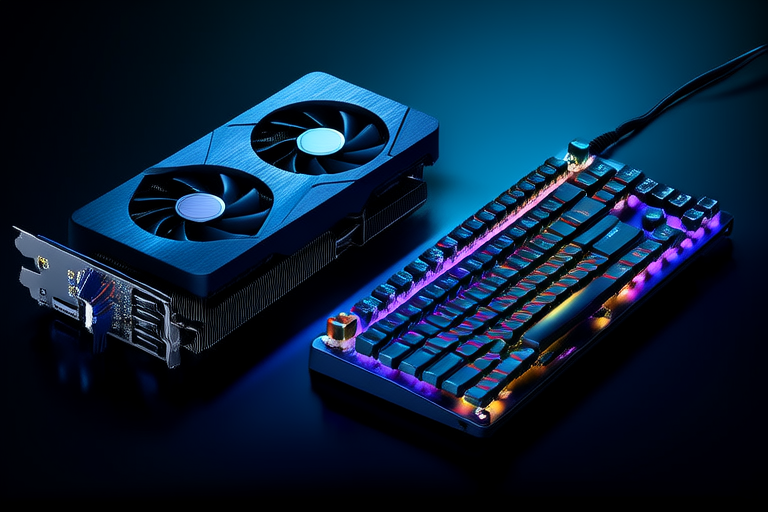
Graphics Processing Units (GPUs) have evolved dramatically, particularly in terms of architectural advancements and capabilities. Modern GPUs are not just for gaming; they play a crucial role in fields like artificial intelligence, scientific simulations, and virtual reality. NVIDIA and AMD have led the charge with groundbreaking technologies such as ray tracing, which enables realistic lighting and shadows in real-time graphics. Machine learning acceleration has also become a key feature, allowing GPUs to handle complex algorithms and large datasets efficiently.
Notable products from these manufacturers include NVIDIA’s RTX 40 series and AMD’s Radeon RX 7000 series. These GPUs offer unprecedented performance in both gaming and professional applications. Additionally, advancements in GPU form factors, such as mini-ITX and dual-slot designs, have made it easier to integrate powerful graphics cards into compact systems. Power consumption has also been optimized, making these GPUs more energy-efficient without sacrificing performance.
3. Memory Technologies
Memory technologies continue to evolve, with the introduction of DDR5 and LPDDR5 being major milestones. DDR5 RAM offers significant improvements in speed, capacity, and energy efficiency compared to its predecessor, DDR4. With clock speeds exceeding 6400 MT/s and capacities up to 128GB per module, DDR5 provides ample bandwidth for modern workloads. Energy efficiency has also been prioritized, with DDR5 chips consuming less power while delivering better performance.
In addition to traditional DRAM, High Bandwidth Memory (HBM) is gaining traction for its exceptional speed and density. HBM modules stack multiple dies vertically, enabling much higher data transfer rates than standard DDR memory. Memory interfaces and standards are also evolving, with new protocols like Compute Express Link (CXL) offering greater flexibility and interoperability between different types of memory.
4. Storage Solutions
Storage solutions have seen remarkable advancements, particularly in Solid State Drives (SSDs) and NVMe drives. SSDs provide faster read/write speeds, reduced latency, and improved reliability compared to traditional hard disk drives (HDDs). NVMe-based SSDs leverage the PCIe interface for even greater performance, with transfer rates surpassing 7GB/s. Advancements in storage capacities, read/write speeds, and endurance have made SSDs an indispensable component for modern computing.
Newer technologies like PCIe Gen5 and Zoned Namespace (ZNS) SSDs are pushing the boundaries of storage performance and efficiency. PCIe Gen5 offers double the bandwidth of Gen4, while ZNS SSDs optimize data placement for better performance and longevity. Hybrid solutions that combine the advantages of both SSDs and HDDs are also emerging, providing a balance between cost and performance.
5. Cooling Innovations
Cooling solutions have become increasingly important as CPUs and GPUs grow more powerful and generate more heat. Liquid cooling systems, such as AIO (All-In-One) coolers and custom loop setups, offer superior cooling performance compared to traditional air coolers. Advances in thermal paste, heat sinks, and cooling materials have further enhanced the effectiveness of these systems. Passive cooling solutions, such as vapor chambers and heat pipes, are also gaining popularity for their ability to dissipate heat silently and efficiently.
Innovations in noise reduction have made cooling systems more user-friendly, especially for silent computing environments. Future trends in cooling efficiency and design include the integration of smart sensors and AI-driven thermal management, ensuring optimal performance and longevity of hardware components.
Conclusion
The latest innovations in computer hardware components are reshaping the landscape of computing, offering unparalleled performance, efficiency, and reliability. From CPUs and GPUs to memory technologies and storage solutions, each advancement contributes to a more powerful and versatile computing experience. As these technologies continue to evolve, they will undoubtedly drive further progress in fields ranging from entertainment to scientific research. Staying informed about ongoing developments in computer hardware is essential for both professionals and enthusiasts alike, ensuring they can harness the full potential of these cutting-edge technologies.